DISH projects
Does tracking your sex life
make it better?

We live in a culture of tracking.
It’s increasingly normal for people to track their fitness, sleep and nutrition.
But is tracking your sex life good for you?
We created a research team with GW4 funding, to investigate apps which ask users to track their sexual life.
Computer scientist Dr Aisling O'Kane; pyschologist Dr Melissa Atkinson; digital sexuality scholars Dr Haili Li and Dr Rebecca Saunders; and doctoral sociology student Emily Haywood.
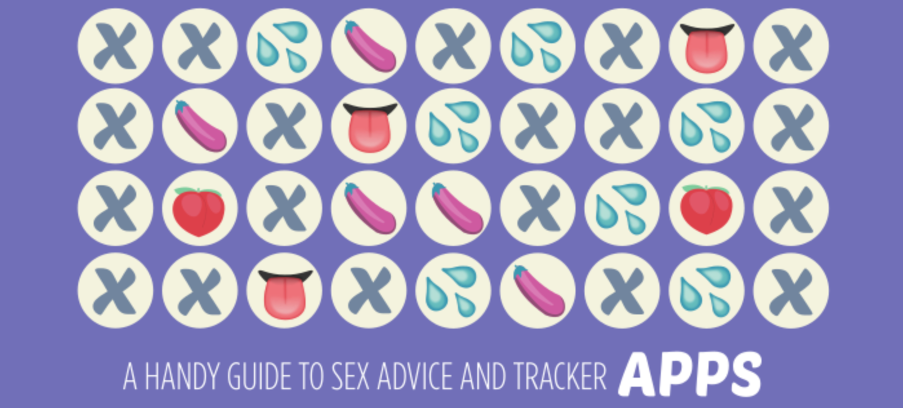
Sex tracking apps require users to quantify sex, rank sexual partners and regularly consult graphs about their sexual habits.
The goal of these apps is to help people have more and better sex.
Our published findings will be available here soon.
Sex tracking apps

Image credit: Yusuf Unuk / Unsplash
Sexual wellness is a $60 billion industry.
But what does being sexually ‘well’ really mean?

Sexual Wellness Apps
Image credit: The New York Public Library, Unsplash
Sexual wellness apps - sometimes called ‘intimacy’ or ‘couples’ apps - are used by millions of people.
They give advice and daily exercises about how to improve your sexual self-esteem, heal from sexual trauma and have a better sexual relationship with your partner.
There is a serious lack of good sex education, and these apps fill a gap.
But what kind of advice does this technology actually give?
Are there any experts involved in their design?
And what are users’ experiences with using them?
Our GW4 research team analysed the content of sexual wellness apps in relation to key markers of sexual well-being, and conducted a detailed analysis of thousands of user reviews.
We wanted to know: what exactly is sexual ‘wellness’ and is using one of these apps likely to improve your sexual well-being?
Our published findings will be available here soon.
Your Guide to
Sex Tracking +
Sexual Wellness Apps
Justin Hancock is the founder of BISH, leading international sex education website. He worked with Dr Rebecca Saunders to bring you some useful insights on some of the sex-related apps on your phone, based on empirical DISH research.
If you’re using a tracker to log your sex life or a sexual wellness app to improve your sexual relationship, this information could be useful for you.
You can find some useful, evidence-based insights here, along with a lot of other really helpful and nuanced advice about sex.
The Consent Lab
DISH is very proud to present The Consent Lab.
These labs use data as a visual arts practice, to create a first-of-its-kind consent education resource.
The Labs are currently delivered to university students in the UK: at King’s College London, Exeter, Bristol, Cardiff, Brunel and Bath universities, with outstanding, measurable outcomes.
The Lab is now being developed into a Consent Curriculum for the whole UK Higher Education sector, with funding from the AHRC.

Is data culture
bad for consent?
We are steeped in data culture. Social media metrics. Our performance measured and quantified at work. Ranking, tracking and counting on our phones in a million different ways.
How does this data culture influence our understanding of consent?
Dr Rebecca Saunders investigates sexual consent apps, a controversial technology which can tell us a lot about how we misunderstand consent. And how the data culture that defines sex-related technologies produces ideas of consent as definitive, linear and as a binary yes/no.
You can read about it in the chapter ‘Sex on the Very Small Screen: Data Culture and Sexual Consent Apps,’ in this new book, edited by Donna Peberdy and Darren Kerr.

How are porn platforms shaping how you have sex?
Porn platforms are watching you
Porn is part of many people’s lives and an important source of income for performers and sex workers.
We want to make visible the effects of big data economies and the digital attention economy on the aesthetics of contemporary porn genres and on the labour demands placed on performers.
The 2026 article Big Data on Pornhub investigates how porn platforms are creating a sexual monoculture.
The book Bodies of Work explores why mainstream porn represents sex as such hard - and often violent - work. And why queer porn has the solution.